Vietnam Weather: Regional and Seasonal Guide
Vietnam weather varies by region and season, shaping travel experiences from north to south. This guide explains Vietnam weather patterns to help you plan the perfect trip based on the best time to visit each region.
Vietnam stretches more than 1,650 kilometers from north to south, creating striking differences in climate across the country. From misty mountains to tropical beaches, weather conditions change noticeably by region and time of year. Understanding these variations helps travelers choose the best destinations, activities, and travel months. This guide explores Vietnam weather in depth, breaking it down by region and season with practical planning tips.
1. Vietnam weather overview by region and season
Vietnam weather is shaped by a tropical monsoon climate, influenced by latitude, elevation, and mountain ranges. While the country generally experiences warm temperatures year-round, rainfall and humidity differ significantly between the north, central coast, and south.
Most regions follow two main seasonal patterns. The dry season usually runs from November to April, bringing clearer skies and more comfortable conditions for sightseeing. The rainy season often lasts from May to October, marked by higher humidity, sudden downpours, and lush green landscapes. However, these patterns are not uniform across the country, making regional knowledge essential.
2. Northern Vietnam climate through the year
Northern Vietnam, including Hanoi, Ha Long Bay, Sapa, and Ninh Binh, experiences four distinct seasons, making Vietnam weather in this region very different from the rest of the country. Seasonal changes are clearly felt throughout the year, influencing travel experiences and scenery.
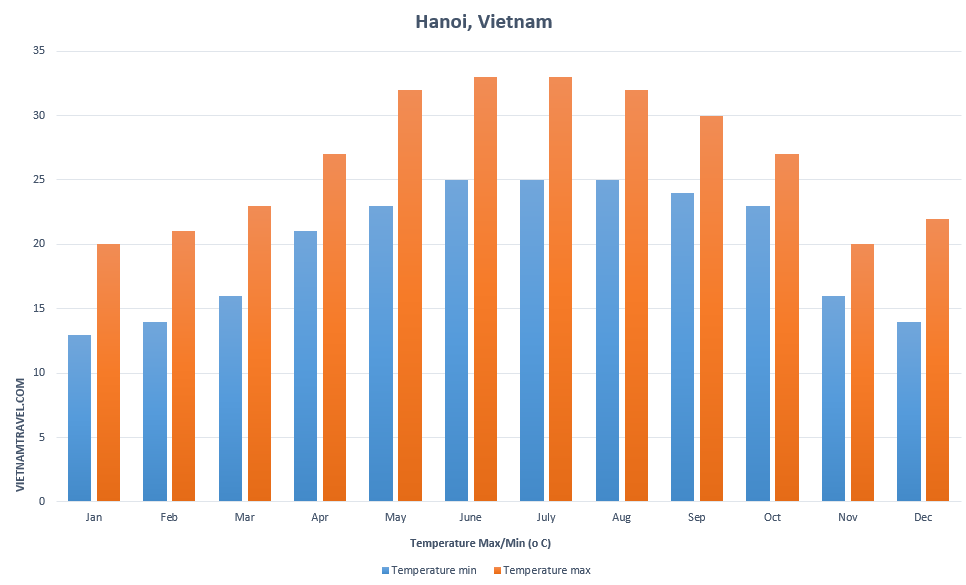
Spring, from March to May, is mild and refreshing, with average temperatures of 20-25°C. Light rain may occur, but Vietnam weather during this season is generally pleasant, ideal for city walks in Hanoi, cruises in Ha Long Bay, and mountain trekking as flowers bloom across the region.
Summer lasts from June to August and is typically hot and humid. Temperatures often reach 30-35°C, with frequent rainfall. Although the heat can be intense, Vietnam weather in summer brings lush greenery, especially in Ninh Binh’s landscapes and the rice terraces around Sapa.
Autumn, between September and November, is widely considered the most comfortable season in northern Vietnam. Cooler air, lower humidity, and clear skies define Vietnam weather at this time, making it perfect for photography and outdoor exploration. Golden rice fields and tree-lined streets create some of the region’s most scenic views.
Winter arrives from December to February, bringing cooler conditions. Temperatures in Hanoi can drop to around 10-15°C, while mountainous areas like Sapa are much colder. During winter, Vietnam weather in the north often includes fog and mist, creating a quiet, atmospheric feel in highland regions.
3. Central Vietnam climate patterns
Central Vietnam includes destinations such as Hue, Da Nang, Hoi An, and Nha Trang, where Vietnam weather is strongly influenced by the Truong Son Mountain Range. This geographical feature creates distinct seasonal patterns that differ from both northern and southern regions.
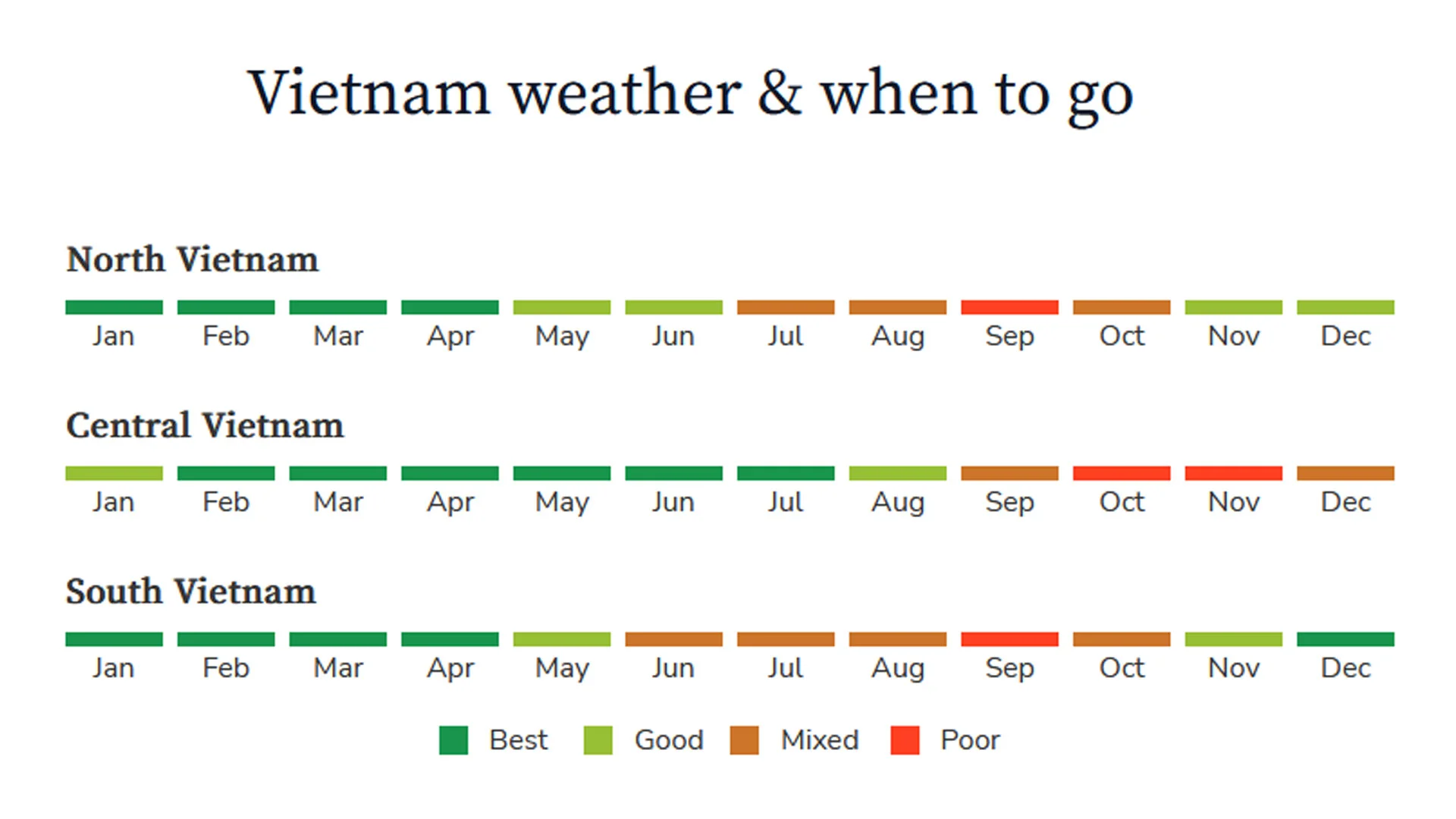
From February to August, the region experiences its dry season. During this time, Vietnam weather is hot and sunny, with temperatures ranging from 25-35°C and plenty of coastal sunshine. These conditions make it the best period for beach activities in Da Nang and Nha Trang, as well as cultural exploration in historic cities like Hue and Hoi An.
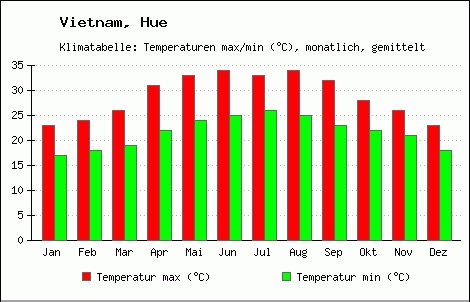
The rainy season in central Vietnam typically runs from September to January. Vietnam weather during these months brings heavier rainfall, particularly in Hue and Hoi An, with October and November sometimes causing flooding. Temperatures cool slightly to around 20-25°C, and although rain is frequent, this season offers a calmer, more atmospheric experience in the region’s ancient towns and heritage sites.
4. Southern Vietnam climate and seasons
Southern Vietnam, including Ho Chi Minh City, the Mekong Delta, and Phu Quoc, has a consistently tropical climate with two main seasons.
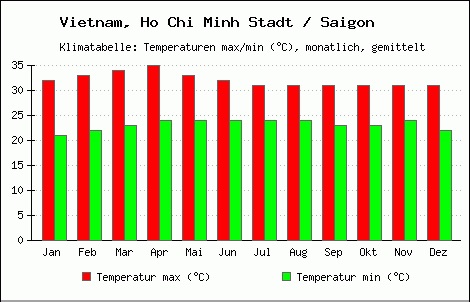
The dry season lasts from November to April and brings warm, sunny weather with temperatures between 25-35°C. December to February is especially popular due to lower humidity, making it ideal for city tours, river excursions, and beach holidays.
The rainy season runs from May to October. Rain usually comes in short, intense afternoon showers rather than all-day storms. Temperatures remain warm, and the countryside becomes vividly green, particularly in the Mekong Delta.
5. Best time to visit Vietnam by region
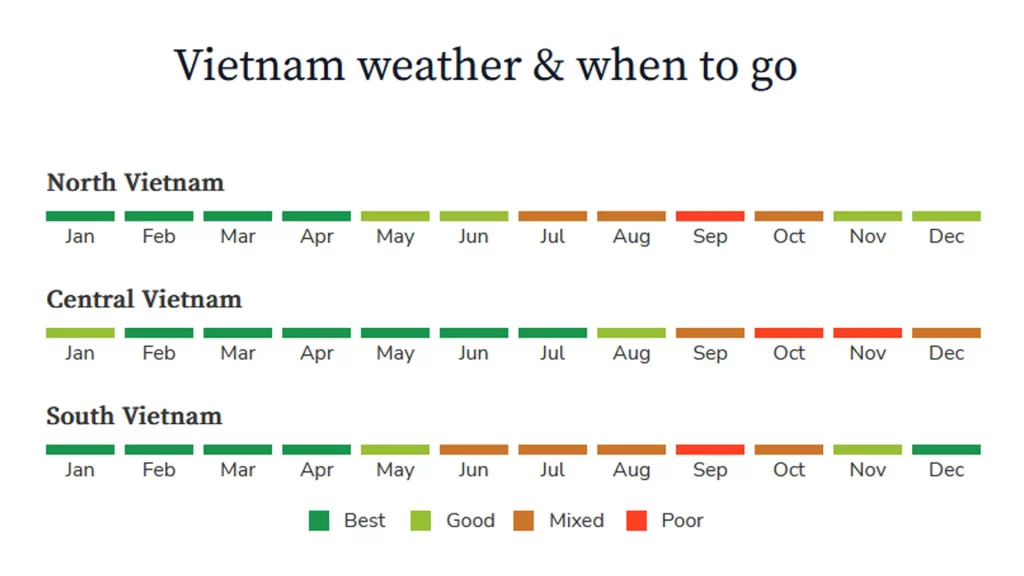
Choosing the right travel time depends on your destination and preferred activities. Northern Vietnam is most enjoyable in spring and autumn when temperatures are moderate. Central Vietnam is best visited from February to August for beach trips and sightseeing. Southern Vietnam is ideal from December to March, offering dry and comfortable conditions.

6. Practical travel tips for Vietnam’s climate
Staying hydrated is essential, especially during hotter months. Lightweight, breathable clothing works well across most regions, while rain gear is useful during wet seasons. Travelers heading to northern highlands in winter should pack warm layers, and checking local forecasts before excursions is always recommended.
7. Notable weather events to consider
Typhoons may affect central and northern regions between July and October, bringing strong winds and heavy rain. Fog is common in mountainous northern areas during winter, while flooding can occur in parts of central Vietnam during peak rainy months.
Vietnam weather is as diverse as its landscapes, offering different travel experiences throughout the year. Whether you prefer cool mountain air, sunny beaches, or vibrant river life, understanding seasonal and regional climate patterns will help you plan wisely. With the right timing and preparation, every journey through Vietnam can be both comfortable and memorable.